Digital Quality Checks for Food Manufacturing: Getting Off Paper Without Breaking the Floor
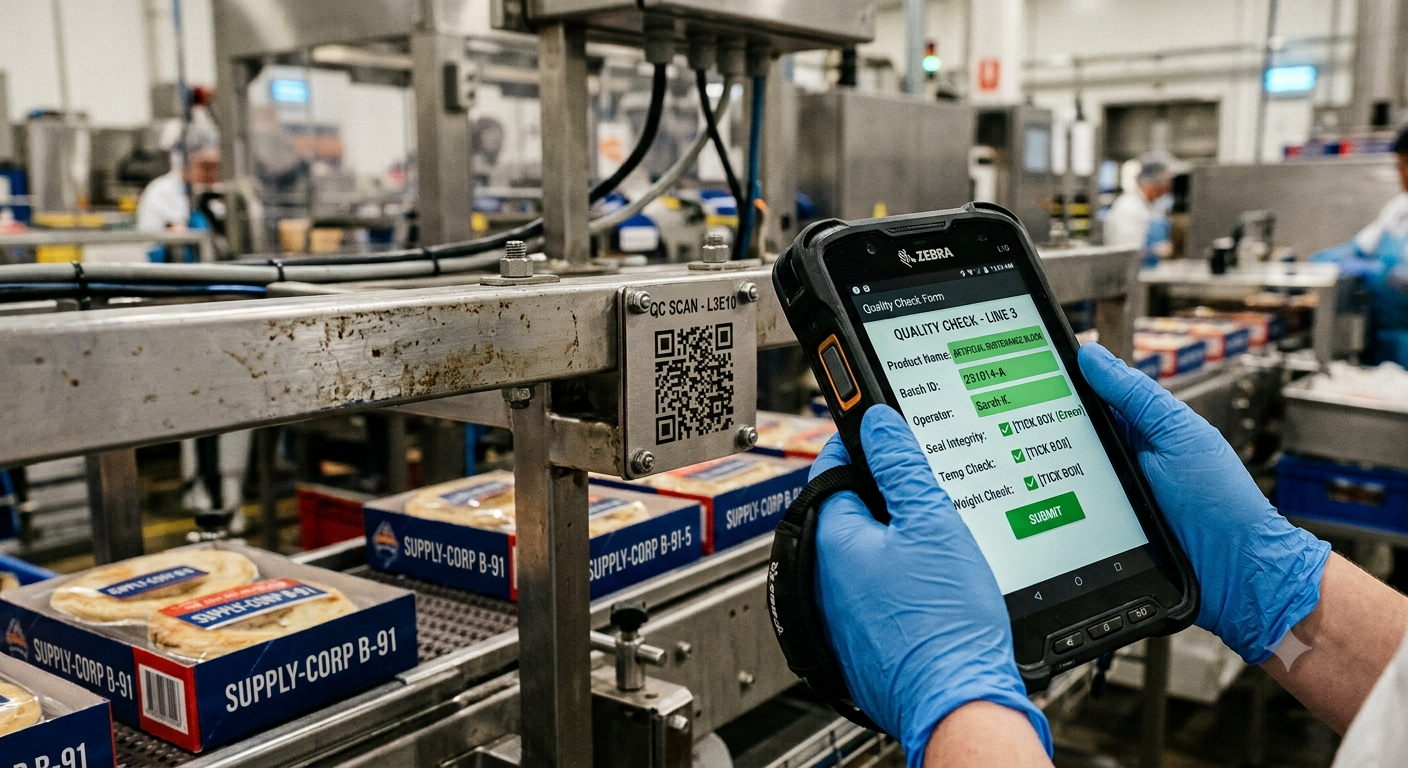
Every food manufacturer I've worked with says the same thing eventually: we know we need to get off paper for quality checks, we just haven't found a way to do it that doesn't slow the floor down or turn into a mess of half-filled digital forms nobody trusts.
That hesitation is fair. I've seen digital rollouts done badly, where a plant swaps paper for a clunky tablet form that takes twice as long to fill in, and operators end up filling it in from memory at the end of the shift instead of in real time. That's worse than paper, because now you've got bad data and you've spent money getting there.
Here's how to actually do it properly.
Why paper fails you eventually, even when it feels fine
Paper quality checks work right up until the moment they don't. The moment is usually one of these:
- An auditor asks for a specific record from three months ago and it takes half a day to find
- A customer complaint comes in and you need to trace exactly which quality checks were done on that batch, and the paperwork is incomplete or illegible
- A pre-filled form gets picked up during an audit, where someone's ticked every box before the run even started because it's faster than checking properly
None of these are hypothetical. They're the exact failure points that show up in weights and measures audits and customer quality reviews, and they're the reason a minor issue turns into a major nonconformance.
What actually makes digital quality checks work on the floor
Speed matters more than features. If a digital check takes longer than the paper version, your operators will find a workaround, and workarounds are how you end up back where you started.
It needs to work exactly where the check happens. QR codes at the station, tied to that specific line or piece of equipment, so an operator scans and the right form comes up immediately.
Real time beats end of shift. The entire point of going digital is that a quality issue gets flagged the moment it happens, not discovered when someone reviews the paperwork the next morning.
Batch and traceability links need to be automatic. A quality check that isn't automatically tied to a batch number, a line, and a time stamp is just a form. The value of going digital is that when someone asks you to trace a batch, the answer is a search, not an investigation.
It has to survive an audit. Auditors will ask when a record was actually created, not just when it says it was created. A digital system needs a genuine timestamp and an audit trail that can't be edited after the fact.
How to roll it out without disrupting the floor
Start with one line, not the whole site. Pick the line with the quality process you understand best, and get the digital forms matching your existing paper checks exactly before you change anything about the process itself.
Get your most experienced operator on that line involved before go-live, not after. They'll spot the friction points in the form faster than anyone in the quality office will.
Run paper and digital in parallel for a short period if you're nervous about data continuity, but set a hard end date for the paper version. Running both indefinitely just means double the work.
Once the first line is genuinely working, and your operators actually prefer it to paper, rolling out to the rest of the site is far easier.
The real payoff
The plants that get this right don't just save time on paperwork. They catch quality issues while they're still small, they walk into audits with confidence instead of dread, and they can answer a customer traceability question in minutes instead of a full day digging through filing cabinets.
That's the actual goal. Not digital for the sake of it, but quality checks that are fast enough that people actually do them properly, and reliable enough that you can trust what they tell you.