Maintenance Backlogs: The Silent Killer of OEE
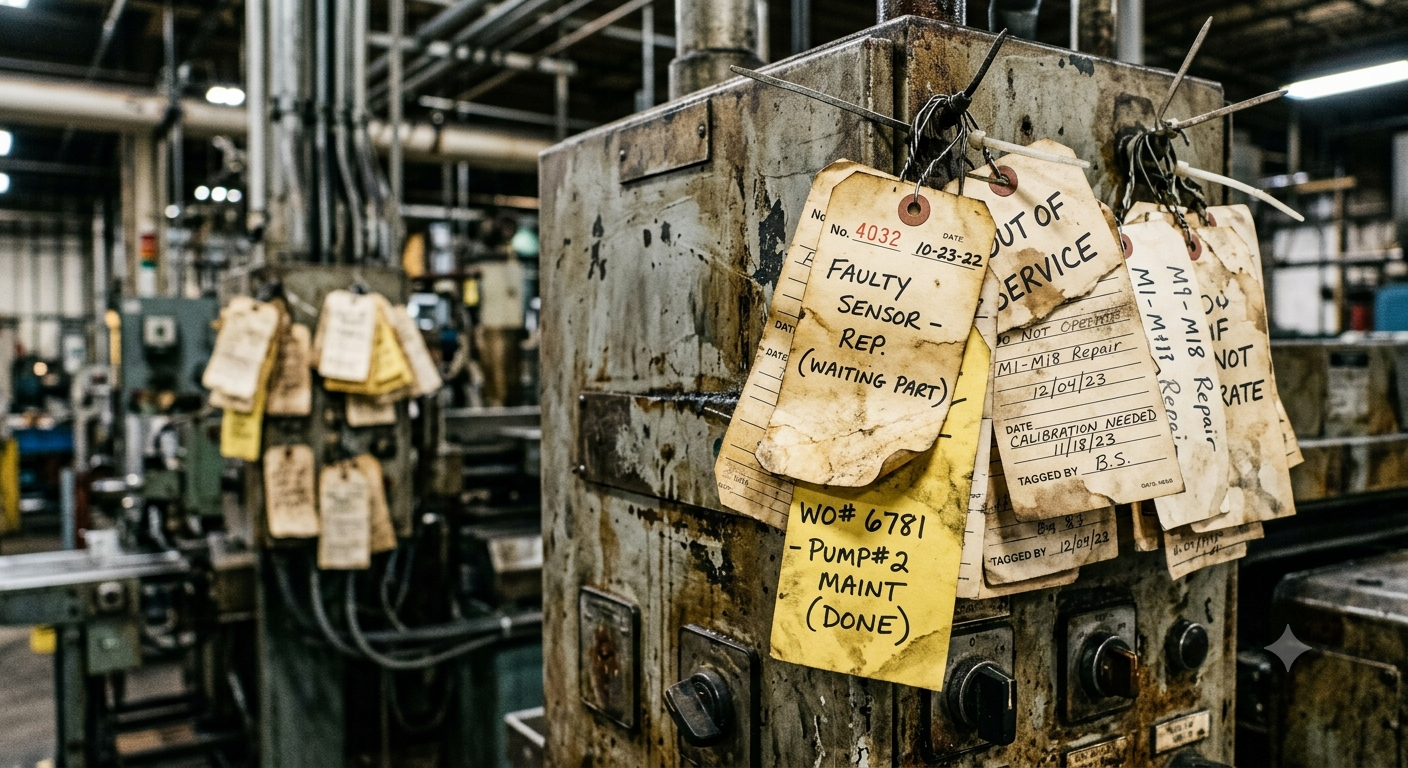
Nobody ever walks into a plant meeting and says the maintenance backlog is the reason OEE is down this month. It's always something more visible, a changeover that ran long, a quality hold, a supplier issue. The backlog just sits there in the background, quietly costing you output in a way that's genuinely hard to see until you go looking for it.
Why maintenance backlogs are so easy to ignore
A maintenance backlog doesn't announce itself. Each individual item on it looks small, a bearing that's running a bit warm, a guard that needs re-fitting properly, a sensor giving occasional false readings. None of these feel urgent enough to stop the line for, so they get logged, deprioritised, and left for "when there's time."
The problem is there's rarely a moment when there's time. So the backlog grows, and each small item sits there as a low-grade drag on performance, a machine running slightly below its proper speed, more frequent minor stops, an operator working around a known issue instead of it being fixed.
Where it actually shows up in your numbers
This is the part that makes it dangerous. A growing backlog rarely shows up as a dramatic breakdown. It shows up as a slow erosion across all three parts of OEE at once. Availability drops slightly as minor stops become more frequent. Performance drops as machines run a touch below their rated speed to compensate for known issues. Quality can drop too, if a maintenance issue is quietly affecting product consistency.
Each of these shows up as a small percentage point here and there, easy to attribute to something else entirely, a supplier issue, an operator error, a bad batch of raw material. The maintenance backlog rarely gets blamed, because it's not the thing that just happened, it's the thing that's been building quietly for months.
Why reactive maintenance keeps the cycle going
Most plants without a proper maintenance system end up reactive by default, not by choice. Without a clear, visible backlog and asset history, maintenance naturally prioritises whatever just broke, because that's the only thing anyone can see clearly. The smaller issues that would prevent future breakdowns keep getting pushed down the list, because there's no easy way to see how much they're actually costing in aggregate.
What actually breaks the cycle
The fix isn't more maintenance staff, most mid-size plants can't justify that anyway. It's visibility. A single, live view of every open maintenance item, how long it's been sitting there, and what asset it's tied to, makes the backlog impossible to ignore the way it is when it's scattered across a whiteboard, a few notebooks, and one supervisor's memory.
Once a backlog is genuinely visible, prioritising becomes a lot easier. You can see which small issues are recurring on the same asset, which is usually a sign of something worth actually fixing properly rather than patching again. You can see how long items have been sitting there and make a real decision about scheduling time to clear them, instead of the backlog just growing indefinitely.
The real payoff
Plants that get on top of this don't necessarily do more maintenance. They do the right maintenance, at the right time, because they can actually see what needs attention instead of only reacting to whatever just failed. And the OEE improvement that comes from that is real, even though it never shows up as a single dramatic fix, just a steady climb once the backlog stops quietly eating into every shift.