Spreadsheets vs MES: When You've Actually Outgrown Excel
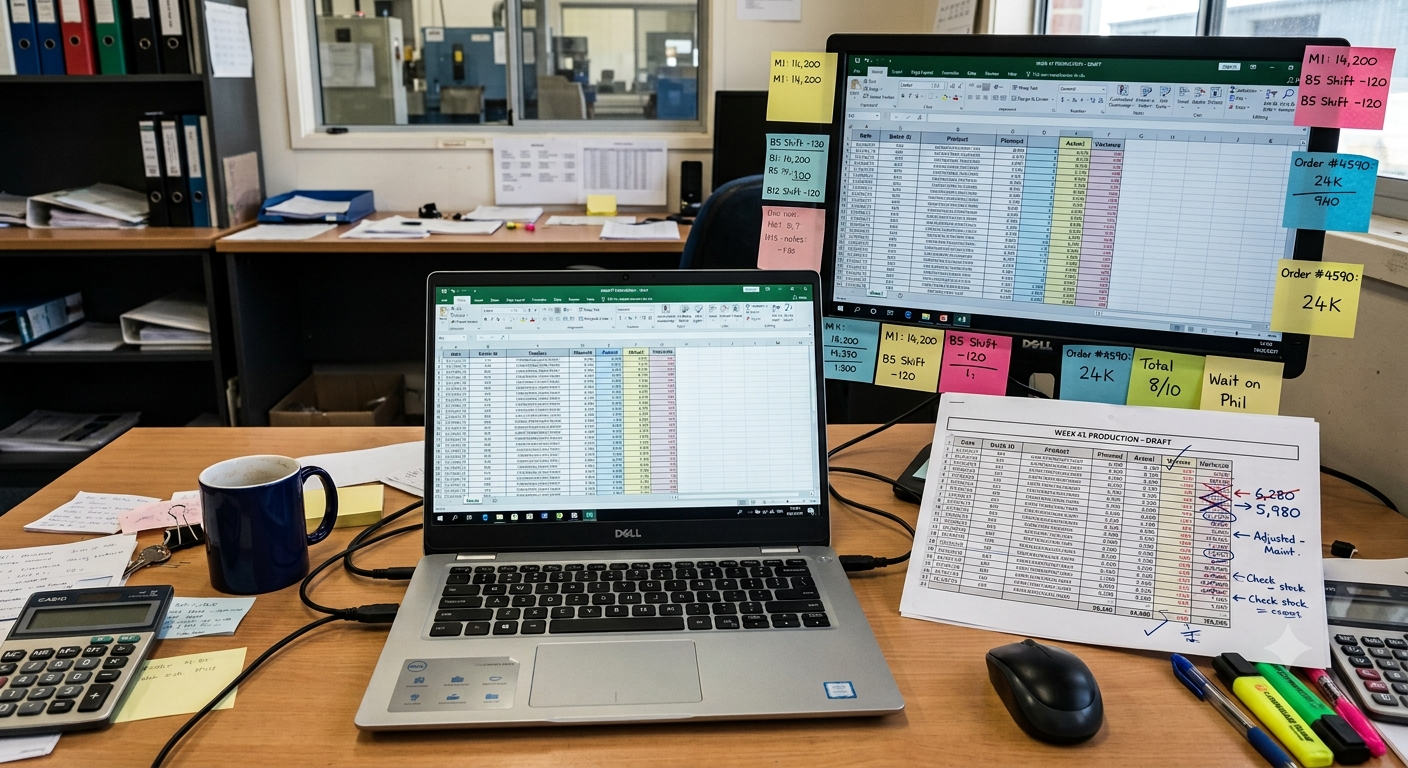
I'm not anti-spreadsheet. I've built plenty of them, some genuinely good ones, to solve real problems on a production floor. Excel is a legitimately great tool for a huge number of jobs. The question isn't whether spreadsheets are bad. It's whether you've quietly outgrown one without noticing.
Spreadsheets are great, right up until they're not
A spreadsheet works well when one person owns it, updates it, and everyone else just needs to glance at the output. The trouble starts when a spreadsheet becomes the de facto system for something that actually needs multiple people updating it in real time, from different parts of the floor, without overwriting each other's work.
That's the exact point most manufacturers hit without quite realising it. The production planner has a version. The supervisor has a version they update on the floor. Someone in quality has a related tracking sheet. None of them are perfectly in sync, and the "real" numbers depend on whoever last touched the file.
The signs you've actually outgrown it
A few patterns I've seen over and over, across different businesses, tend to show up right before a spreadsheet stops being the right tool:
- More than one person needs to update the same data at the same time, and you're managing that with version names or shared drive conflicts
- Getting a simple answer, like current OEE for the week, requires pulling numbers from three different tabs or files and doing the maths manually
- Nobody fully trusts the numbers, because everyone knows there's a decent chance someone forgot to update their tab
- The same information gets typed in twice, once on the floor and again by someone back at a desk, because the floor version isn't usable directly
If two or three of these sound familiar, that's usually the signal, not a single big failure, just a steady accumulation of friction that's quietly costing time every single day.
What actually changes with a proper system
The difference isn't really about features, most spreadsheets can technically be built to track most things. It's about who can update the data, and how directly.
A proper system lets the person on the floor enter something once, at the point it happens, and have it show up everywhere it needs to, production numbers, quality records, maintenance logs, without anyone re-typing it later. That single change removes most of the friction spreadsheets create once more than one person is involved.
You don't need to rip everything out at once
If this sounds familiar, you don't need to abandon Excel across the whole business overnight. Start with the one process causing the most pain, usually production tracking or quality checks, and move that specific piece to a system built for multiple people updating it live. Keep spreadsheets for the things they're still genuinely good at.
Excel got you this far for a reason. It's a good tool. The trick is recognising the exact moment a good tool stops fitting the size of the job, and not waiting until the friction has been costing you time for a year before you do something about it.