One Shift, Five Systems, Zero Answers
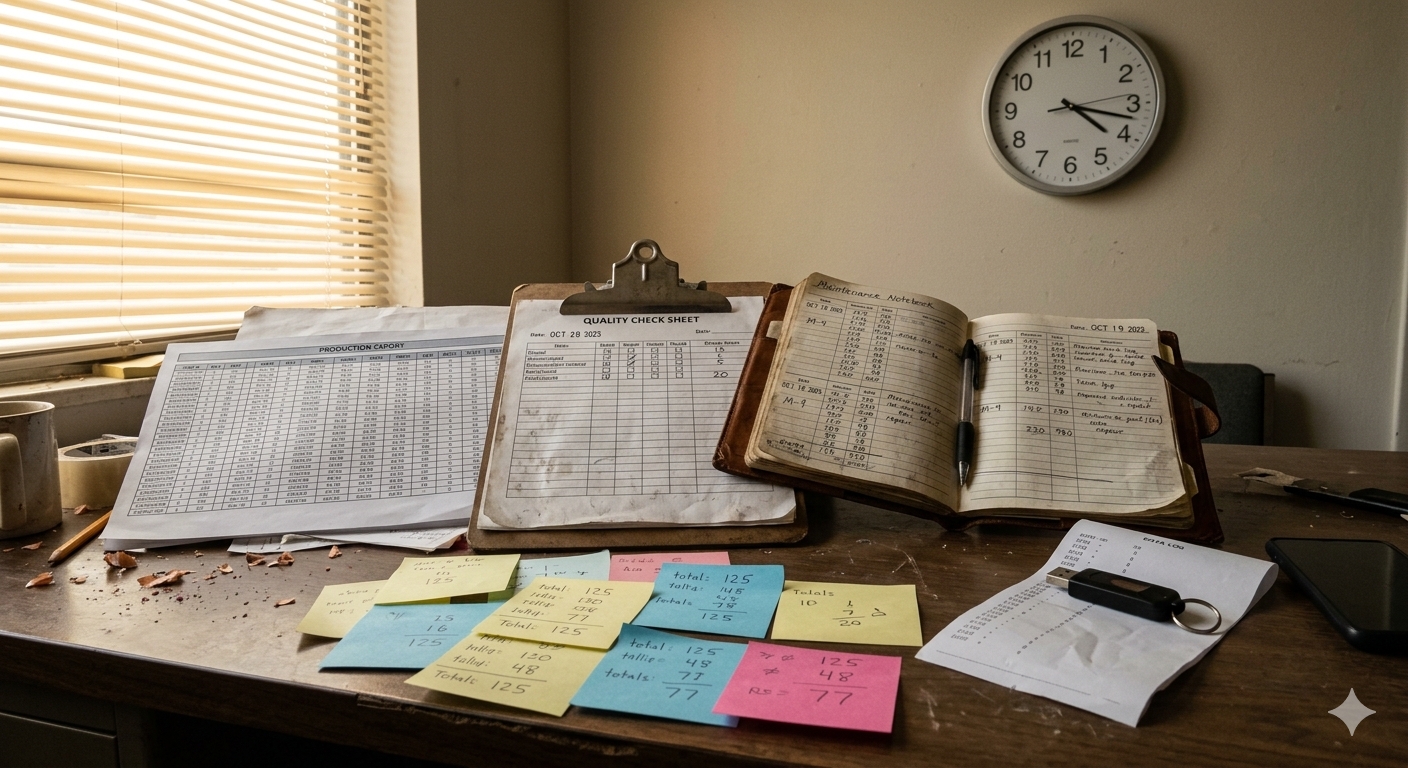
There's a specific kind of frustration that only shows up around 4pm on a Friday, when you need one number and getting it means asking four different people to open four different systems.
I lived that for most of my career. Production data sat in one system. Quality checks sat in another. Maintenance logs were somewhere else entirely, usually a mix of a work order tool and whatever the maintenance team actually trusted, which was often a notebook. Downtime got logged by whoever remembered to log it, in whatever format they felt like that day. None of it talked to each other.
If I wanted a proper shift report, one that actually told me what happened across production, quality and downtime together, I had two options. Piece it together myself by exporting from each system and stitching it in a spreadsheet, which took hours and was out of date the moment I finished it. Or ask IT to build it into a proper report, usually in Power BI, pulling from every source system into one dashboard.
The second option sounds like the right answer. It is, eventually. The problem is the word eventually.
Most mid-size manufacturers don't have a dedicated BI team sitting around waiting for requests. You've got an IT person or a small team who also handles email, network issues, the ERP, and everything else that breaks. Your request for a linked report goes into a queue behind fixing the printer in the office and whatever the finance system needs this month. If you're lucky, it gets built in a few weeks. If you're not, it gets built roughly, breaks the first time a source system updates its export format, and nobody notices until the numbers stop making sense.
And even when it works, it's static. You want to add one more field, split downtime by shift instead of by day, or pull in a new machine that just came online. That's not a five minute change. That's back in the queue, waiting for the same team, competing with the same priorities, for something that should take an afternoon.
I spent years accepting that as normal. Everyone I worked with did too. You learn to make decisions on Tuesday's data because Thursday's report isn't ready yet, and you stop asking for the version that shows everything together because you already know the answer is "put in a request."
That's the actual problem Nexshift set out to solve, more than any single feature. Production, quality, downtime, and maintenance living in one system means there's no linking step to wait on. A shift report is already a shift report, not five exports someone has to stitch together. An operations report already knows what happened across the whole floor, not just the part one system tracked.
Where it goes further than I originally expected is what you can do once everything genuinely is in one place. Ask NexAI what's driving downtime this month and it can look across shift, product, and machine data together, because that data was never split apart to begin with. That's not a report someone builds for you once and then forgets to update. It's a question you can ask again next week and get a current answer, without anyone touching a Power BI file.
I don't think most manufacturers know how much slower their decision making is until they see what it looks like when the wait disappears. I certainly didn't, until I built the thing that removed it.
If you want to see what this looks like in practice on the reporting side specifically, I've written before about the traceability side of the same problem in Batch Traceability Without a Full-Time Data Person.